
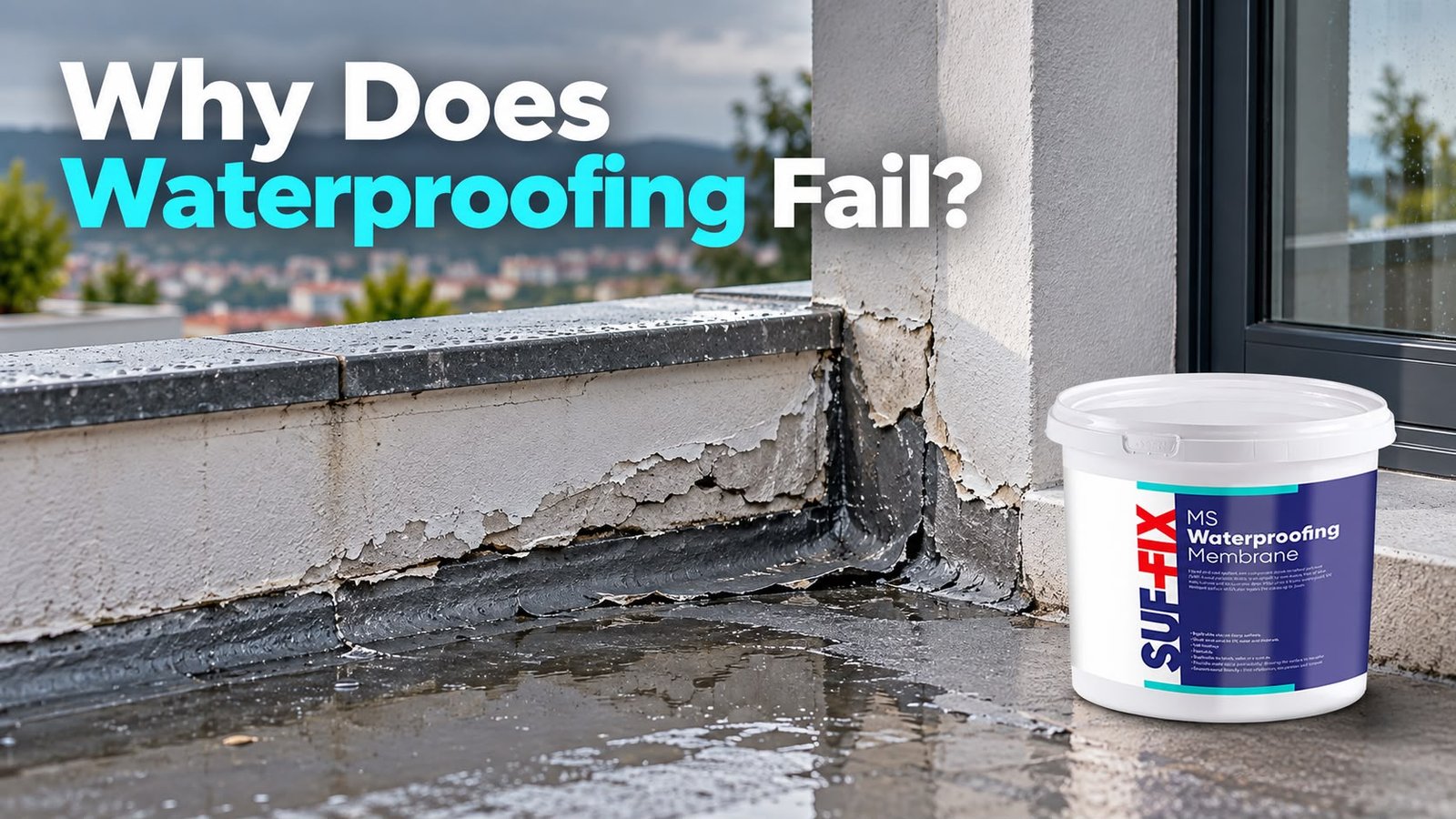
Waterproofing is designed to keep water out of a building.
Yet even high-performance waterproofing systems can fail when the wrong product is selected, the surface is poorly prepared or vulnerable details are overlooked.
In many cases, water ingress does not happen because the waterproofing product itself is inadequate. The real problem can be found in preparation, application, movement, drainage or incorrect product selection.
Understanding these common mistakes can help homeowners, contractors and building professionals prevent unnecessary water damage and extend the service life of waterproofing systems.
Not every waterproofing product is designed for the same purpose.
A sealant used for a moving construction joint may require different properties from a membrane designed to protect a large terrace.
Likewise, a localised leak around a pipe penetration may require a different solution from a complete roof waterproofing system.
Before selecting a product, consider:
The substrate
Expected movement
Water exposure
UV exposure
Temperature changes
Application conditions
Required durability
The right product is not necessarily the strongest product.
It is the product whose properties match the application.
Surface preparation is one of the most important stages of any waterproofing application.
Dust, dirt, loose material, oil, grease or deteriorated previous coatings can interfere with adhesion.
Even a high-performance waterproofing product may not perform as intended if it is applied over an unsuitable surface.
Before application, the substrate should be inspected and prepared according to the requirements of the selected system.
A strong waterproofing system starts with a suitable surface.
Large surfaces often receive most of the attention.
However, water frequently enters through smaller and more vulnerable areas.
Examples include:
Window frames
Door thresholds
Roof penetrations
Pipe connections
Wall-to-floor joints
Construction interfaces
External trims
These areas can experience movement and different materials may expand and contract at different rates.
Ignoring these details can create weak points even when the surrounding surface has been properly waterproofed.
Buildings move.
Temperature changes, structural movement and different substrate properties can place stress on joints and connections.
If a rigid material is used where flexibility is required, cracking or loss of adhesion may occur over time.
Flexible sealants and membranes can be better suited to applications where controlled movement is expected.
The key is to understand how the joint or surface will behave after installation — not just how it looks on the day of application.
A visible water stain does not always indicate where the water is entering.
Water can travel behind finishes, through joints or along construction details before appearing inside a building.
For this reason, simply sealing the visible area may not solve the underlying problem.
A proper inspection should identify:
Where is the water entering?
How is it travelling?
Which construction detail is allowing it through?
Only after identifying the source can the appropriate repair or waterproofing approach be selected.
Waterproofing and drainage work together.
A waterproof surface can still experience unnecessary stress when water remains on it for prolonged periods.
Blocked gutters, poorly functioning drains or insufficient falls can increase exposure to standing water.
Before carrying out waterproofing work, drainage should therefore be checked as part of the overall assessment.
Keeping water moving away from vulnerable areas is an important part of long-term building protection.
One of the most expensive waterproofing mistakes is simply waiting.
A small failed joint may initially allow only a small amount of water to enter.
Over time, repeated exposure can affect surrounding materials and increase the scale of the repair required.
Regular inspections can help identify:
Cracked sealants
Open joints
Damaged membranes
Deteriorated coatings
Water staining
Vulnerable penetrations
Areas of repeated moisture exposure
Preventative maintenance is usually easier than dealing with extensive water damage after it has developed.
Effective waterproofing is not simply about applying a waterproof product.
It is a complete process:
Inspect the building.
Identify the vulnerable points.
Understand the substrate and exposure conditions.
Select the appropriate construction chemical.
Prepare the surface correctly.
Apply the system according to its requirements.
Inspect and maintain it regularly.
This approach helps reduce the risk of water ingress and allows potential problems to be addressed before they become major repairs.
At Suf-Fix, construction chemical solutions are developed for practical applications where surfaces, weather conditions and building materials can vary.
From sealants and flexible membranes to solutions for localised leaks and exposed surfaces, choosing the right technology for the right application remains at the centre of effective waterproofing.
Because waterproofing performance is not determined by the product alone.
It is determined by the entire system — from preparation and product selection to application and maintenance.
Waterproofing failure rarely happens without a reason.
Poor preparation, incorrect product selection, ignored joints, movement, drainage problems and delayed maintenance can all contribute to water ingress.
By identifying these risks early and choosing solutions according to the actual application, building owners and professionals can reduce the likelihood of costly water damage.
The goal is not simply to stop today’s leak.
It is to prevent tomorrow’s problem.
If you are unsure which sealing or waterproofing solution is suitable for your application, contact the Suf-Fix technical team for product guidance and technical support.
Suf-Fix
314 Midsummer Boulevard
Milton Keynes, Buckinghamshire
MK9 2UB
United Kingdom
E-mail: sales@suf-fix.com
Phone: +44 (0) 2030265219
Our experts are ready to help you find The right solution for your project.